
What adult friendship, people-pleasing, and learning to be known have taught me at 27.
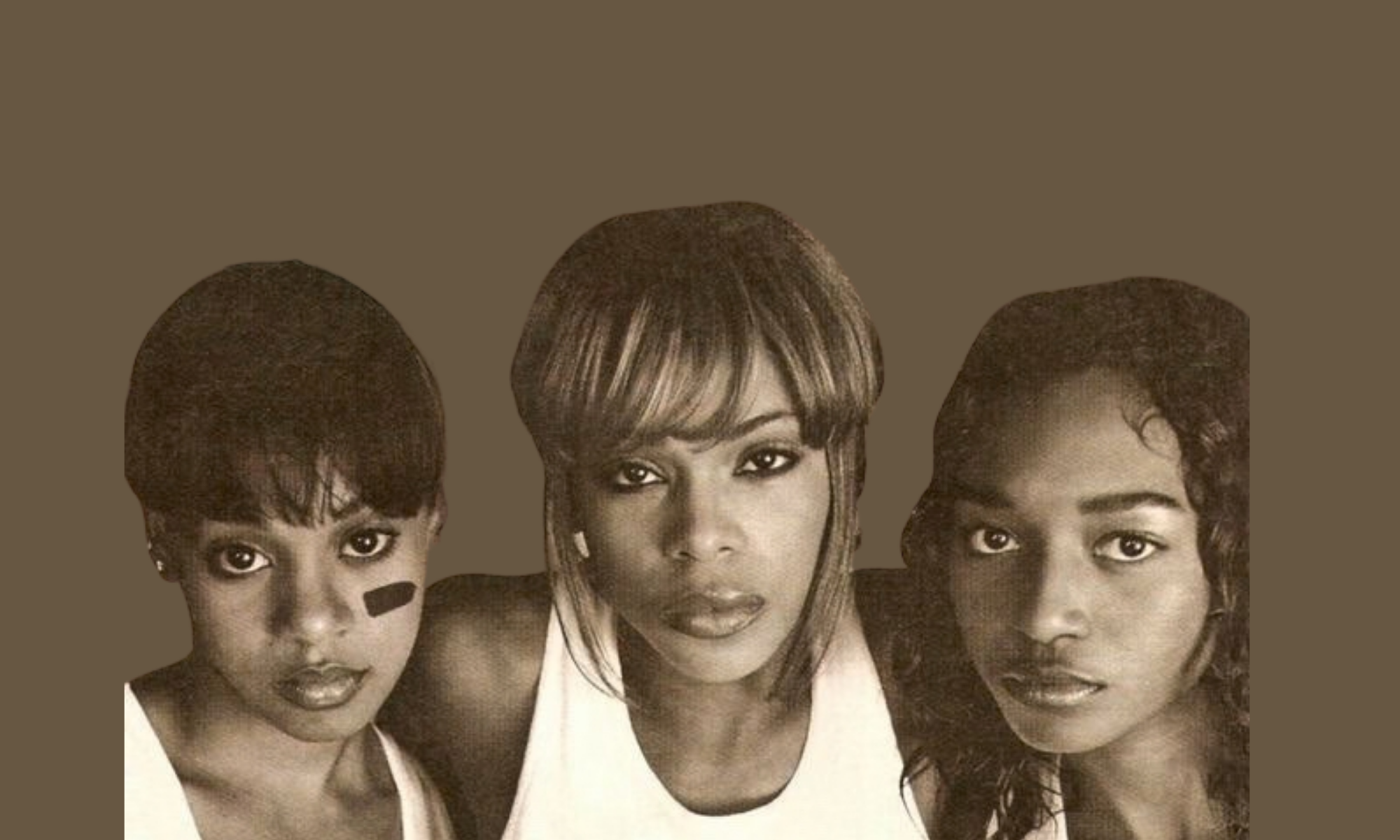
I love the girl group TLC, from “Waterfalls” to “No Scrubs” and all the deep cuts the group has to offer. (“Red Light Special,” “I Miss You So Much,” and “Diggin’ on You” are definitely in my top three.) But one song in particular has always stood out to me: “What About Your Friends?”
I first heard it in middle school when I was deep in my ’90s R&B retrospective, having missed its release by seven years. Beyond the intro being one of the best I have heard in forever, I remember thinking intensely about the message of the song.
- Who are your friends?
- Who can you depend on?
- Who is going to be there when things get difficult?
Twelve years later, the song rings truer now than ever before. I am currently at a point where I do not believe I have a best friend. Honestly, I do not know if I will have another one again.
That sounds dramatic, but I have been spending a lot of time thinking about what friendship actually means to me, particularly as I enter my late twenties and figure out what adult friendship is supposed to look like. And after looking closely at my friendships, past and present, I have realized something uncomfortable:
I have spent a lot of my life being a great friend without necessarily learning how to be a friend who needs people, too.
I Learned How to Be the Dependable Friend
Do not mistake me and believe that I have never known true friendship. There are moments in my life when I can genuinely say I felt loved and supported by my friends, and I remember those moments vividly. Therein lies the problem. I can remember the times I felt supported. I cannot remember all the times people have called on me and I have shown up for them. That feeling does not feel as reciprocated. And, as the ancestors laid out before us in the hymn, “It ain’t nobody’s fault but mine.”
I love the people I have been blessed to call my friends. This is not an indictment of one particular friendship, past or present. This is really about me. More specifically, this is about a recovering people pleaser who is also the child of a professional people pleaser: my mother.
Both my mother and I are high in agreeableness, but there is one major difference between us. My mother was never too prideful or hyper-independent to ask for help.
I often disliked watching how much energy she would expend for her friends. Seeing her doing more at funerals than the family of the deceased used to drive me up a wall. And do not get me started on the countless thousands of dollars she sent back home to our relatives in Haiti. But when my mother needed help, she called her siblings, cousins, closest friends, and, of course, us as her children.
I picked up the first lesson:
Be available. Be supportive. Show up.
I did not pick up the second:
Let people show up for you.
And that distinction has followed me into adulthood.
I learned how to be dependable before I learned how to depend on people.
The Problem With Not Asking for Much
When I analyze my friendships, I arrive at the same conclusion I have reached about many of my other relationships, including familial and romantic ones: I find myself disappointed. But I am beginning to understand why. I did not ask for much in return from my friends. I made sure they knew I was dependable, available, reachable, and eager to help. I made myself useful. What I did not do was require the same.
That became especially clear around my birthday. I do not play about birthdays. Mine, but especially everybody else’s. There was a point in undergraduate school where I knew people’s birthdays better than I knew their names. Whether you told me once in elementary school or the week before, once I hear your birthday, I attach it to you like a phone number to a contact.
So it was disheartening to receive an exponential amount of belated birthday wishes while the actual day of my birthday was relatively silent. The only reason many people remembered was because I posted about my birthday the following day. I did that intentionally. Part birthday post. Part social experiment. Part data collection for this essay. And it made me wonder:
Do my friends actually know me?
Do My Friends Really Know Me?
Many of my conversations with friends revolve around dating—or, for me, the lack thereof—school, careers, and the other trivial life situations this world offers. But if I hosted a game show and asked my friends questions about me, I am confident that most would struggle with some of the deeper ones.
- How many siblings does Ronald have?
- Which siblings is he closest to?
- What are his relationships with his siblings actually like?
- What are Ronald’s insecurities?
- Does Ronald actually want to get married and have children?
- What is his favorite color?
Meanwhile, I can answer these questions about my friends. One friend’s favorite color is green. Another’s is royal blue. My mother’s favorite color is sunset, a mix of orange and pink. I am almost certain I know all of my friends’ siblings, most of them by name. Because of my empathetic nature, I am also very perceptive about my friends’ insecurities. I try to give them space to talk about difficult things without judgment.
But there is a problem with all of this.
It is my responsibility as the expert on my own life to tell people about myself. I cannot be upset that people do not know things I have never told them. And this is where I have to be honest with myself. I have spent years becoming incredibly good at making other people feel seen while remaining incredibly difficult to see.
Friendship in Your Late Twenties
So why does this matter so much now? I just turned 27. I have been in a new city for over a year, and I am trying to understand what friendship looks like when everyone is becoming an adult in different directions. Friendship was easier in school. You saw your friends all day. In college, dorm parties, campus events, classes, and random Tuesday nights gave you endless opportunities to build relationships.
Adult friendship is different. People are building careers. Getting married. Having children. Caring for parents. Moving across the country. Figuring out finances. Trying to maintain romantic relationships while also maintaining themselves. The time for casually crafting new friendships seems to disappear. And yet, I have never been a loner. If anything, I was the antithesis of one. I had different friend groups and plenty of associates to hang out with on any given day. Even now, I do not find it particularly difficult to meet new people.
- I am good at conversation.
- I am agreeable.
- I am personable.
- I can make people comfortable.
As long as the conversation is not about me. That is the irony of people-pleasing. You can become incredibly skilled at making other people comfortable while being deeply uncomfortable with allowing people to care for you. And I think that is where I am now. I am not necessarily struggling to meet people. I am becoming more intentional about who I allow to become my friends.
I Am Afraid of Friendship Ending
Another part of my hesitation is the ever-changing nature of friendship. I am someone who has maintained friendships for over a decade, with some dating back to childhood. A few years ago, I fell out of friendship with some genuinely great people. At the time, they were arguably the closest people to me. There were no dramatic warning signs. No traumatic event. No obvious betrayal. And, somehow, that made it worse.
When someone does something terrible, you can point to the terrible thing and say, That is why the friendship ended. But what happens when there is no villain? What happens when people you once spoke to every day slowly become people you no longer speak to at all? You are left with the uncomfortable knowledge that something precious can simply end.
That has made me question whether I want to invest that deeply in new people again. Even if I meet them, have I healed enough to trust them? Have I healed enough to believe that a friendship can change without making the entire relationship feel like a waste? I do not know. And I think that uncertainty is part of becoming.
What Do I Actually Expect From My Friends?
I take the character of my friends seriously. I want to believe that my friends will stand with me and by me. But there is an interesting contradiction here. I am not usually the type of friend who puts the people I love in a position where they have to defend me. I can fight my own battles. And most of the time, I do. There are plenty of microaggressions and blatant disrespect that I deal with that my friends know nothing about.
On one occasion, I heard secondhand information about two men talking about me. Both were the fraternity brothers of a mutual friend, one of whom was also a close friend’s boyfriend. I take the story with a grain of salt because, in every version I heard, my actual friends were in the same room. Nobody stood up for me. Nobody would tell me who the shit-talkers were.
That is a big no-no for me. We are not children. If someone is talking shit about your friend, you should put your friend up on game. I do not need my friends to fight my battles. But I do need to know that they have enough regard for me to make sure I am not unknowingly walking into a room where people have already decided to disrespect me.
That is part of what I mean when I talk about reciprocal friendship. It is not about keeping score. It is about knowing that the relationship has enough mutual care that you are not the only person paying attention.
Maybe I Have Been Too Good at Being Fine
So yes, there are some friendship demotions I need to make. Not because everyone in my life is bad. Not because my friends do not love me. And not because every friendship needs to become some perfectly balanced, emotionally intimate relationship.
- Some people are friends.
- Some are associates.
- Some are community.
- Some are people I love deeply but do not necessarily rely on.
- Some are people I can have fun with.
- Some are people I can call when I need advice.
- Some are people I can call when I need help moving a couch.
There is nothing wrong with knowing the difference. A friendship demotion does not have to be punishment. Sometimes it is simply classification. It is saying:
I love you, but I understand what this relationship is now.
And maybe that is part of growing up. But there is another piece of this that I cannot ignore. I cannot complain that people do not know me while refusing to let them know me. I cannot demand reciprocity while never asking for anything. I cannot expect people to show up for a version of me that insists it does not need anyone. That is not entirely their failure. Some of it is mine.
What About Your Friends?
I know for sure that I want people in my life whom I can depend on. I am grateful for the friends who have remained in my life and continue to grow alongside me. I am grateful for the friendships that have survived distance, time, changing careers, changing cities, and changing versions of ourselves. But in this new chapter, I also know that I do not have all the answers. What I do know is that if I want deeper friendships, I have to allow people to truly see me.
- I have to ask for help.
- I have to admit when I am struggling.
- I have to share the things I normally keep to myself.
- I have to give people the opportunity to know my insecurities, my family dynamics, my hopes, my fears, and all the other things that make Ronald Ronald.
And I have to accept that vulnerability does not guarantee reciprocity. It simply makes reciprocity possible. That is the work of friendship I am interested in now. Not collecting more friends. Not having the biggest social circle. Not proving that I am the person everyone can call.
I want relationships where I can call, too. I want friends who know me beyond what I can do for them.
- Friends who ask.
- Friends who remember.
- Friends who notice.
- Friends who show up.
And perhaps most importantly, I want to become the kind of person who allows them to.
Because the question is no longer simply:
What do I want from my friends?
It is:
What kind of person do I need to become to build the friendships I say I want?
That is the harder question. And probably the more important one. I am in the market for new friends—and a boo thang, too. So, if y’all are ready to apply, you know where to find me. But please understand:
This new season is about becoming real, and real only recognizes real.
With Love,
Ron the Universe