

Last night, I watched Straw, Tyler Perry’s latest film, with my mother — and let me tell you, we were both in tears. Not because the acting was bad (it wasn’t), or because the wigs were tragic (more on that later), but because it held up a mirror to the Black community and asked, “Where’s the village?”
This isn’t your typical Tyler Perry movie review. It’s a reflection on how Straw centers Black single motherhood, mental health, and the slow breakdown of community care, especially for people like us — Black, queer, and others just trying to survive a world that often overlooks us.
Janaiyah, Natural Hair, and the Beauty in the Breakdown
First, let’s talk about visual storytelling. Taraji P. Henson’s portrayal of Janaiyah — a struggling single mom — was both heartbreaking and heroic. Her natural hair journey in the film deserves a moment. As her character spirals deeper into hardship, her silk press reverts to curls — and that detail? Powerful.It’s a quiet nod to the realities of Black women everywhere. How our hair often tells the story before we even speak. Her unraveling wasn’t just emotional — it was textural. And instead of being nitpicked for not “keeping herself up,” she was seen. Taraji embodied every mother who’s had to be provider, nurturer, protector, and more.
“I’ve Been There” – A Shared Story for Many Mothers
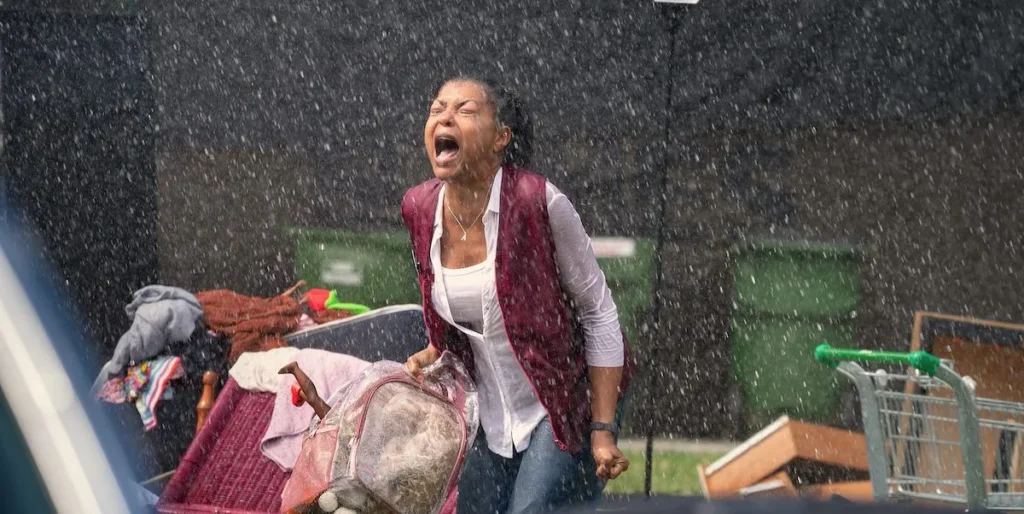
My mother cried watching this film because she’s lived it. As an product and avid ally to Black women, especially those raising kids alone or holding down households, I know what it feels like to rob Peter to pay Paul. The shame. The exhaustion. The quiet prayers over unpaid bills.
What’s wild is Janaiyah didn’t suffer in silence. She told people she needed help. Her landlord. Her boss. The child welfare worker. The bank teller. And still — nothing. That’s what hurts the most. She didn’t “fall through the cracks.” She was pushed into them.
And all she needed was $521 to keep her child fed and housed.
Teyana Taylor’s Moment: A Cop with Compassion
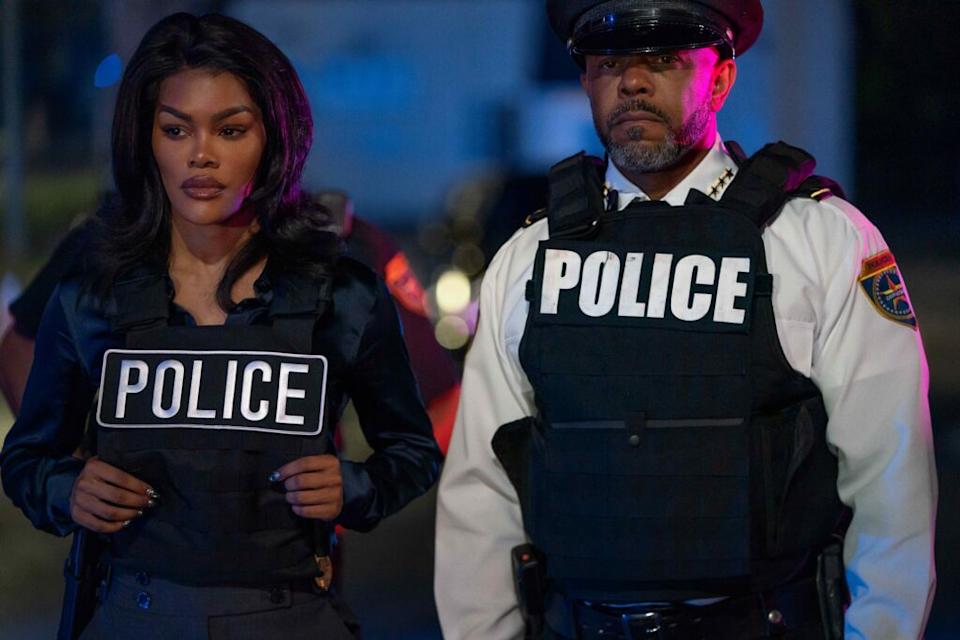
Now, let’s shift to Teyana Taylor, aka Detective Kay Raymond. First of all, she’s in her BAG this year — returning from retirement, finding new love, and starring in roles that show off her depth and drive. Her character in Straw was a refreshing take on what policing should look like: protective, compassionate, human.Detective Raymond was the one person in the system who truly listened. She didn’t just clock in — she cared. And sometimes, that’s all it takes. Just one person extending a hand can pull someone back from the edge.
Sherri Shepherd’s Surprise Performance
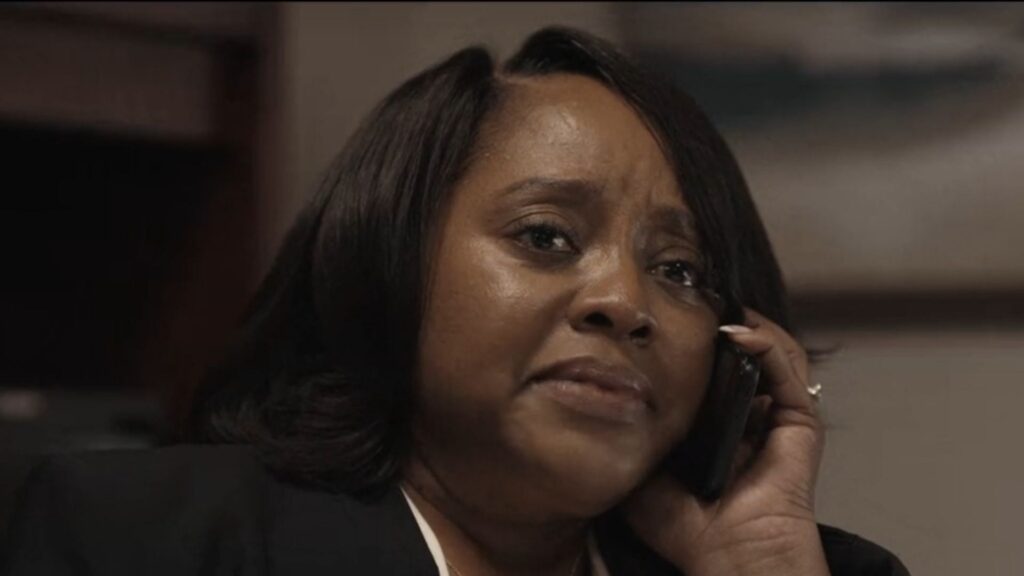
Let’s be real — when I saw Sherri pop up as Nicole, I was skeptical. The wig was a lot. But her acting? A pleasant surprise. As a no-nonsense bank manager who softens with empathy, her character’s arc was one of quiet strength. She becomes another helping hand. Another person who sees Janaiyah when so many chose to look away.
By the film’s end, Sherri delivered a performance that felt grounded in real-life struggles many of us know all too well.
Where Is the Village?
Here’s where the review turns into a call to action. Straw highlights the slow but steady breakdown of the Black community. We used to lean on each other. Rent parties, church fundraisers, calling your auntie instead of Instacart. Where did that all go?
What happened to helping our neighbor with childcare? Letting a friend crash on the couch until payday? Or just checking in when we haven’t heard from someone in a minute?
We’re losing our village mentality, and it’s costing us. Janaiyah’s story isn’t fiction — it’s reality for too many Black women. For $521 and a little compassion, her life spiraled into chaos. That’s not just a failure of “the system.” That’s a community failing too.
Mental Health in the Black Community
This film is also a reminder: mental health matters. Especially for Black women. Especially for queer folks. Especially for the ones always expected to “keep it together.”You are allowed to break. You are allowed to ask for help. And when someone does reach out — believe them. Don’t minimize their pain. Don’t offer empty “stay strong” platitudes. Sit with them. Support them.
A Bittersweet Ending
Without spoiling too much, Straw ends… okay. Not with much bloodshed, but not with a fairy tale either. And maybe that’s the most honest ending we could hope for.
It’s not a perfect film. The wigs still wage war. But it tells the truth in a way that’s hard to ignore. And if nothing else, it reminds us that we need each other now more than ever.
Final Thoughts
To every Black woman reading this: you are not alone. If you’ve ever been at your last straw, I see you. I feel you. And I’m rooting for your healing. Let’s be the village again. Let’s be the help someone else is praying for.